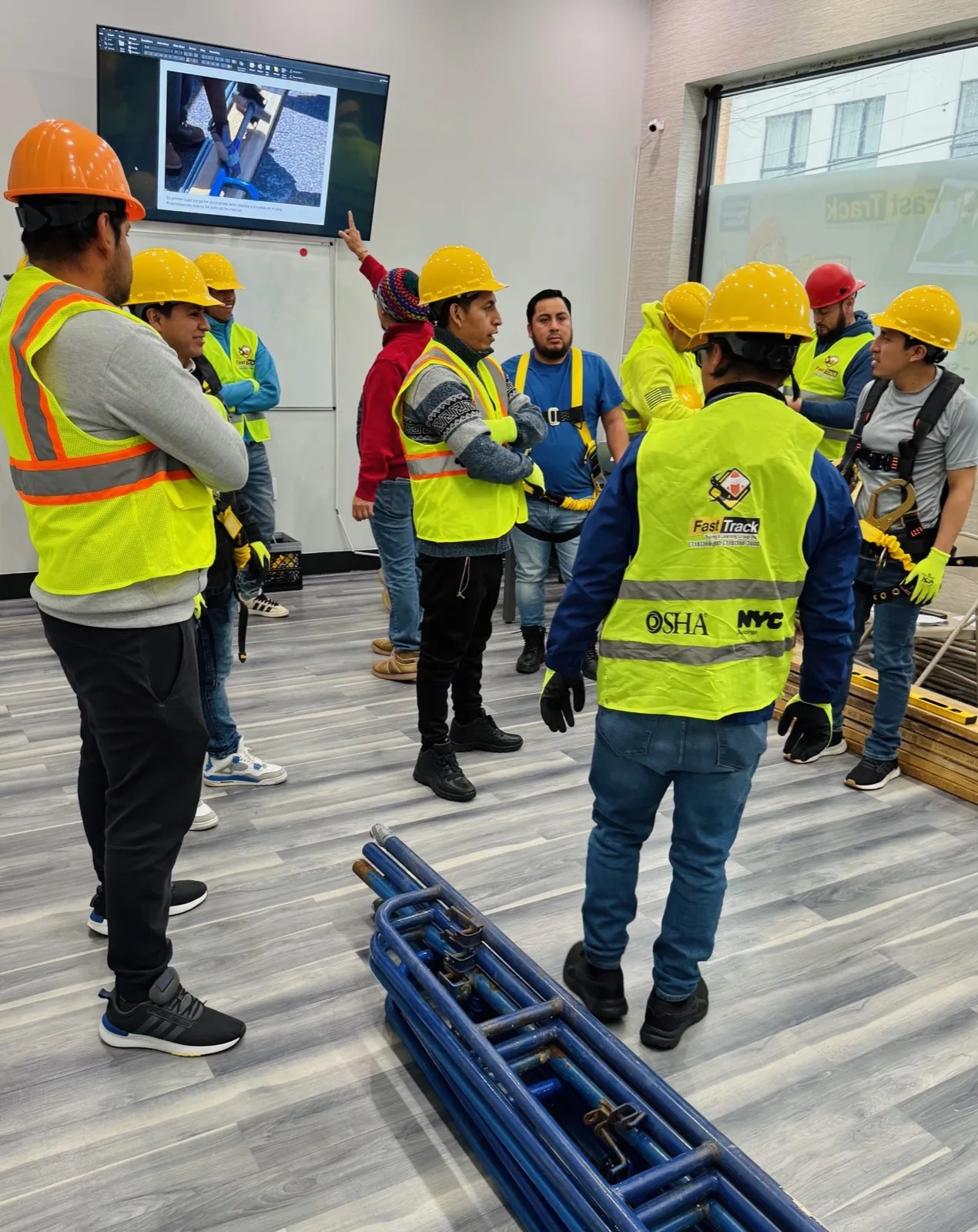
Conciencia de Sílice (2 Horas)
Training NYC
Protegiendo su salud y manteniendo el cumplimiento de OSHA
Este curso de 2 horas cubre los peligros del polvo de sílice, la exposición permissible y las medidas de protección requeridas por OSHA 1926.1153.
¿Sílice cristalina respirable?
La sílice cristalina es un mineral natural que se encuentra en arena, piedra, arcilla y muchos otros materiales de construcción. Cuando estos materiales se cortan, muelen o perforan, pequeñas partículas de sílice se liberan al aire.
La sílice inhalada puede provocar enfermedades pulmonares graves, incluyendo silicosis, cáncer de pulmón y enfermedad pulmonar obstructiva crónica (EPOC).
Tipos de silicosis
La exposición prolongada al polvo de sílice puede resultar en tres tipos diferentes de silicosis, dependiendo de la intensidad y duración de la exposición.
Estándar OSHA 1926.1153
OSHA ha establecido límites de exposición específicos y requisitos que todos los empleadores y trabajadores en la industria de la construcción deben seguir.
Límite de exposición permissible (PEL)
El PEL de OSHA para sílice cristalina respirable es de 50 microgramos por metro cúbico de aire (50 μg/m³), promediado en un turno de trabajo de 8 horas.
Si la exposición supera el Nivel de Acción de 25 microgramos por metro cúbico, los empleadores deben implementar medidas protectoras específicas.
Tabla 1 de OSHA
La Tabla 1 de OSHA enumera tareas específicas de construcción y los controles requeridos para mantener la exposición por debajo del PEL.
Plan de control de exposición (ECP)
Los empleadores deben desarrollar y implementar un Plan de Control de Exposiciones escrito que identifique las tareas que pueden exponer a los trabajadores a la sílice y las medidas que se tomarán para proteger a los trabajadores.
Persona competente
Las regulaciones de OSHA requieren que una "persona competente" supervise la implementación del ECP y realice las evaluaciones de exposición. Nuestra capacitación le ayuda a usted o a su supervisor a cumplir con este requisito.
Aprenda a identificar peligros de sílice correctamenteConexión de Capacitación DOB
El DOB ha introducido Training Connect, un sistema de verificación digital que permite a los inspectores escanear su código QR para verificar su credencial de Conciencia de Sílice al instante.
Verificación instantánea
Ya no más cargar certificados de papel que se pierden o desgastan.
A prueba de auditoría
Cuando un inspector del DOB escanea su código QR, su estado de Conciencia de Sílice aparece inmediatamente.
Integración perfecta
Este curso es una parte vital de nuestro programa de 5 tarjetas para principiantes, asegurando que tenga un perfil de seguridad completo.
Protección respiratoria
Cuando los controles de ingeniería no son suficientes para mantener la exposición por debajo del PEL, se requiere protección respiratoria. Our training covers the proper use of respirators for silica protection.
Su socio de certificación de sílice
Fast Track Training & Learning Group Inc. es un centro de capacitación aprobado por el DOB que entiende las necesidades únicas de la fuerza laboral de NYC. No enseñamos solo de un libro; enseñamos desde la experiencia.
Parte de nuestro Programa de 5 Tarjetas para Principiantes
La Conciencia de Peligros de Sílice es una de las cinco tarjetas esenciales que todo nuevo trabajador de construcción de NYC debería tener. Al combinar esto con su OSHA 30, Tarjeta SST, Usuario de Andamio y capacitación de Flagger, se posiciona como un profesional de primera clase, consciente de la seguridad, listo para cualquier proyecto en la ciudad.
Complete su perfil de seguridad de 5 tarjetas más rápidoRespire tranquilo en el sitio de trabajo con nuestra ayuda
El polvo de sílice no tiene que ser una sentencia de muerte. Con la capacitación correcta y el uso adecuado de los controles de la Tabla 1 de OSHA, puede trabajar con concreto y piedra de manera segura durante décadas. Únase a los miles de trabajadores de NYC que han confiado en Fast Track Training para proteger sus pulmones y carreras.
Nuestros Programas de Capacitación
Explore nuestras certificaciones principales de seguridad en la construcción en NYC. Cada programa está diseñado para cumplir con los requisitos de OSHA y la Ley Local 196 de NYC.
OSHA 30 Horas
Certificación integral de seguridad para supervisores y gerentes.
SSTPaquete SST 40 Horas
Cumpla con la Ley Local 196 de NYC con nuestra tarjeta SST completa.
SCAFFOLDAndamio 4 Horas
Capacitación de usuario de andamios aprobada por DOB para trabajadores de NYC.
FLAGGERAbanderado 4 Horas
Certificación de control de tráfico para zonas de trabajo en construcción.
SILICASílice 2 Horas
Concientización sobre sílice cristalina respirable para cumplimiento de OSHA.
SUPERVISORSupervisor SST
Capacitación completa de 62 horas para coordinadores de seguridad del sitio.